The Illusion of a General Crisis
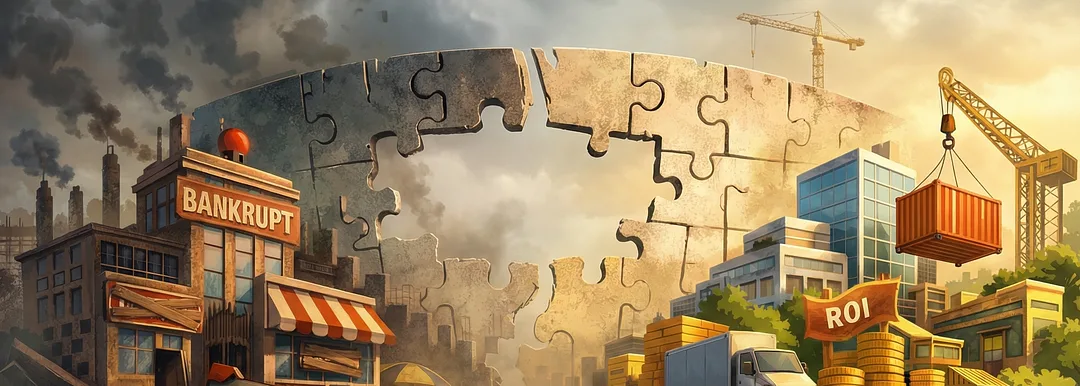
One of the key insights is that there is no general diagnosis for the market.
There is no such thing as “everything has collapsed” or “everything is growing.” There is a highly fragmented reality, where some companies find their model and scale, while others continue to operate under old models and don’t understand why they no longer work.
The market isn’t dead. It has become more complex. And less tolerant of naivety.
The Winners Are Not the Most Creative
A very painful but important thought: today, the winners are not those with a “beautiful idea,” but those who understand the numbers.
Unit economics, margins, logistics, customer value, capital turnover—everything that was previously considered a boring backdrop for “creativity” has now become the basis for survival.
Most new brands die not because the product is bad, but because they’re underfed. They don’t have the resources to survive until the point where the brand actually matters to the market.
Sanctions as a filter, not a death sentence
Another important shift is that sanctions are no longer an excuse.
Yes, things have become more difficult. Yes, logistics and raw materials require different solutions. But the market has already adapted: Turkey, India, China, local suppliers, alternative packaging.
For some, this was the end. For others, it was a point of growth.
And here, the question isn’t about circumstances, but about the ability to restructure supply chains and thinking.
Why “soul” matters again
Against the backdrop of total product standardization, the value of cultural codes has unexpectedly risen sharply.
Arab perfumes and Korean skincare products sell not because they have a “better formula,” but because they convey an identity.
This is an important signal for local brands: copying no longer works. The search for one’s depth, one’s story, one’s honest tone is at work. Not a marketing one, but a genuine one.
AI isn’t killing marketing, it’s killing mediocrity.
Artificial intelligence is already here. It speeds up, reduces costs, optimizes.
But it doesn’t create meaning. And that’s precisely why the “soul of a product” is becoming the new luxury.
Paradoxically, the more AI there is, the higher the value of human qualities—ideas, taste, tone, honesty.
Professional markets are no longer “professional.”
The line between mass-market and professional cosmetics is blurring.
Customers have become more educated, access to information is broader, and demands are higher. Salons and brands will have to rethink their role: not “we know better,” but “we understand more deeply.”
Where is the next growth?
Africa, India, and Southeast Asia are no longer exotic, but a logical continuation of the global movement. The middle class is growing there, a beauty culture is taking shape, and that’s where real export opportunities are shifting.
This isn’t a conversation about panic or inspiring slogans.
It’s about the maturation of the market. It’s about the end of illusions, which means real growth opportunities have emerged for those willing to think, calculate, and feel simultaneously.
And now a question for you.
What do you consider the biggest problem in the beauty industry today: money, meaning, people, or honesty?
At the Open Beauty Hub community, we talk about exactly this—without gloss, but with perspective.